






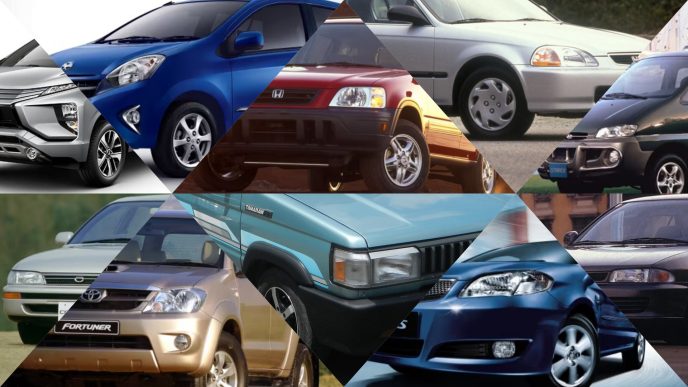
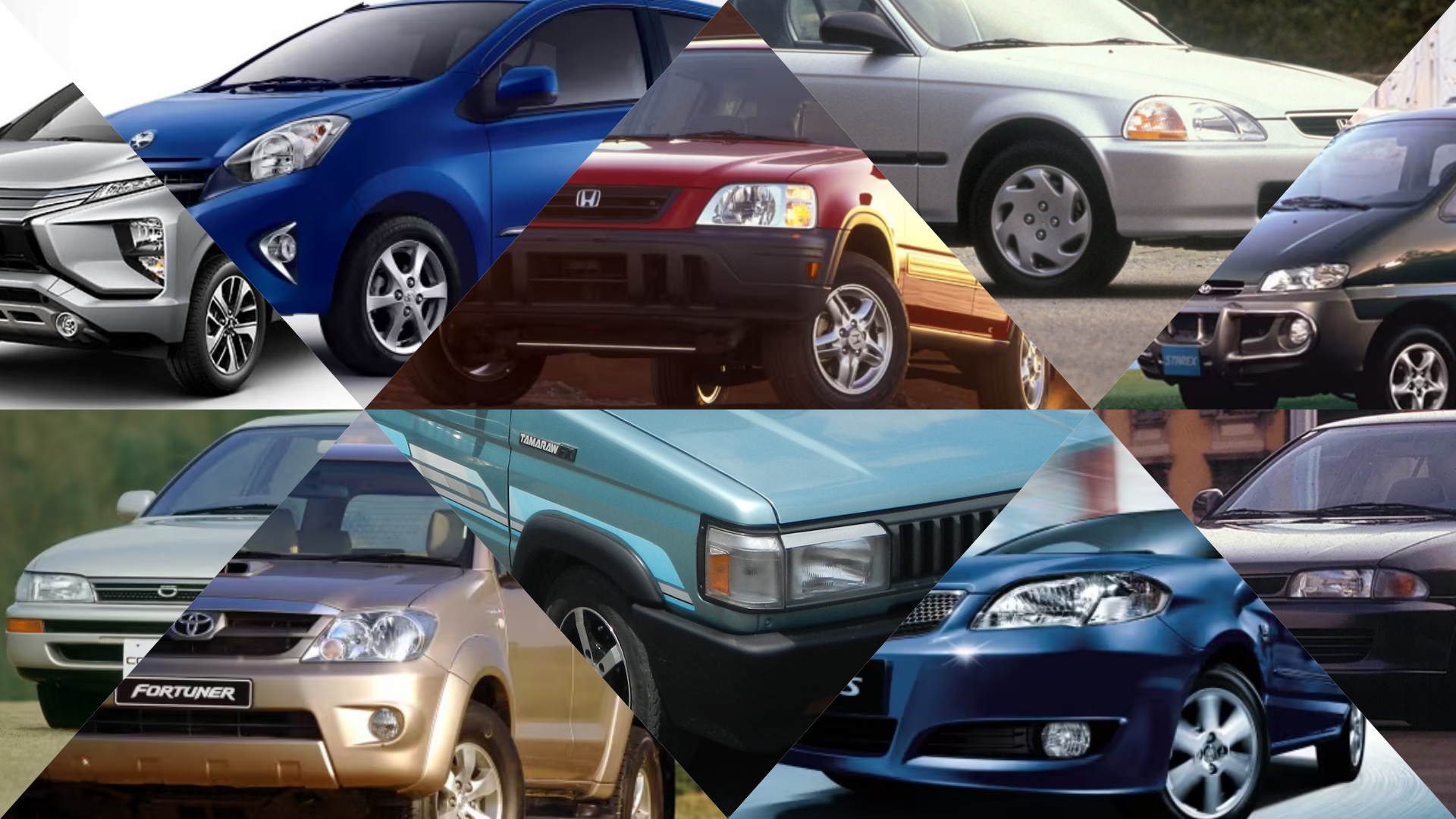
The Philippine STAR is having its 39th anniversary this month. It was founded in 1986, a few months after the People Power Revolution, a time when box-type sedans were considered contemporary. It’s fascinating how history truly repeated itself – a Marcos sits in Malacañang, while boxy cars like the Hyundai Santa Fe, Kia EV9, and the Suzuki Jimny are the current fad.
The almost four decades of automotive history of the Philippines cannot be defined by a single car or segment, though. Different times brought out different icons, and these names have transcended through time. Some are still being talked about despite being phased out – their names holding a lot of weight despite the arrival of new cars and segments in the country.
Now, don’t crucify me if your favorite car isn’t on the list. It’s hard to compress almost 40 years of motoring into a list of ten. What’s certain is that these cars have indeed affected Filipinos as more than a means of mere mobility.
Mitsubishi Lancer

First in the list is the car with perhaps the most creative nicknames in the industry. Known as the “box type,” “singkit,” “itlog,” “pizza pie,” “Cedia,” and simply “EX,” the Mitsubishi Lancer has been a mainstay in the Philippines for a lot of years. Filipinos are very fond of it because for a time, it was the only sedan in the Philippines as Mitsubishi never left the country despite the turbulent Martial Law years. It looked like the Lancer would last for a while like its contemporaries. However, it could not win against its greatest opponent – consumer demand (or the lack of it). The global decline for sedans prompted Mitsubishi to pull the plug on the Lancer and it was discontinued in the country around 2017 and globally soon after.
Toyota Corolla

The Toyota Corolla, along with the Mitsubishi Lancer and Honda Civic, established the sedan dominance in the Philippine market in the 90s. As with the scene then, all three were being modified for design and performance. However, the Corolla deviated from that with its fleet variants that were used as taxis, company vehicles, and even used by some government agencies, allowing it to be more visible on the roads. Mechanics also raved about its simpler but reliable engine making it easy to maintain. This is why it became the de facto choice of families that have moved up in lifestyle and wanted their first private car.
Honda Civic

Unlike Mitsubishi and Toyota, Honda was a newcomer in the 1990s. They quickly cemented their place in the market by bringing in the Civic EG, then one of the first to have fuel injection and an automatic transmission. Filipinos loved the look of the Civic. Tuners and enthusiasts were quick to discover its capability when given performance parts and more power was extracted from the engine. It soon shot to iconic status just a few years later with the launch of the Civic SiRl. It had a 1.6 liter VTEC B16A engine that produced 160 hp—unheard of at the time.
Toyota Tamaraw

Toyota is known for many cars but it’s the Tamaraw that has moved most Filipinos – literally. It started its life in the Philippines as a barebones utility model. The arrival of the third-gen Tamaraw FX had a wagon variant that made it appealing to Filipino families. It gained popularity on the roads as private owners used it to ferry passengers from one point to another which was later on legitimized. It’s the reason why the term “FX” was used to refer to this kind of PUV segment. Nowadays, even after they were phased out decades ago, there are still many old Tamaraws on Philippine roads. Then in December 2024, Toyota introduced the next-gen Tamaraw, once again tending to the needs of Filipinos.
Honda CR-V / Toyota RAV4


Our fourth item is a tie as they both carved a new segment in the Philippines. Crossovers are SUV-looking cars but the same unibody construction as sedans. This gave them a softer ride quality than SUVs despite their somewhat similar look. The Toyota RAV4 was the first crossover in the country. Its first generation is a 3-door model that appealed to the affluent young Filipinos. On the other hand, the Honda CR-V has space for a family with its 5-door model. It even had a pull-out hidden table in the cargo area, making it great for picnics and other outdoor activities. Their massive popularity in the Philippines, as well in other countries, sparked the crossover boom.
Hyundai Starex

The Hyundai Starex is perhaps the first van to deviate from the people-hauling focus of the vans of its time. The Starex was the first to break out of the ‘boring’ mold of box-shaped vans and utilized a wedge-shaped front complemented by a more premium cabin. The seats have more cushion, some variants have wooden veneers on the dashboard, and overall are easier to drive than its contemporaries. These characteristics made it appealing to Filipinos looking beyond a 4×4 or sedan for their family vehicle. Another effect of the Starex in the industry is it undoubtedly helped remove the stigma against Korean cars in the Philippines.
Toyota Vios

When the Corolla was elevated to Altis status, the Vios was launched to be the new entry-level sedan of Toyota in the Philippines. Its fresh look, combined with the reliability the brand is known for, quickly gave the Vios a traction in the market. Fleet models made it more visible on the road while the upper variants appealed to private owners. After the second-gen model was introduced, the Vios climbed up to become the bestselling car in the Philippines in 2008 and has stayed there since. That is despite the popularity of crossovers, arrival of new brands, and stiff competition from its rivals in the country.
Toyota Fortuner

As the economy got worse, the Land Cruiser became too expensive for families wanting an SUV. At the other end, the Toyota RAV 4 was a tad too small. Toyota solved this by introducing the Fortuner. This 7-seater midsize SUV was based on the Hilux platform and like the Vios, was an instant hit. There may have been other SUVs already in the segment when it arrived, but the Fortuner’s blend of muscular aesthetic combined with a more premium cabin made it stand out in the crowd. It also helped that it was more affordable than other offerings at the time.
Toyota Wigo

Before the Wigo, you can already see small hatchbacks on the road. There’s one or two in malls, in open parking lots of offices and commercial buildings. Then one day you wake up and you just see the Wigo everywhere. Toyota may have been late in the small hatchback arena but they definitely knew how to steal the show. The Wigo’s immediate takeover of the scene can be attributed to its pricing, space, and creature comforts that are better than its rivals. Its sub-500k pricing allowed non-car owning households to have their first car, and made others ditch the deteriorating public transportation means.
Mitsubishi Xpander

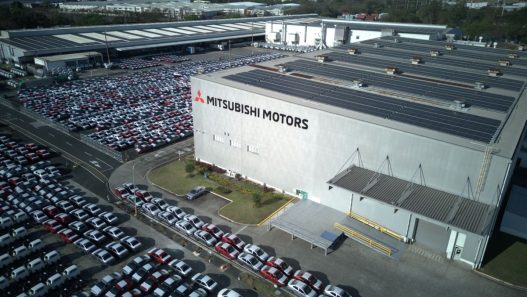
The Mitsubishi Adventure could not comply with the stricter emission standards and so it bid goodbye to Filipinos at the end of 2017. There was a looming cloud over the brand as an icon had to be replaced. The anxiety ended when the Mitsubishi Xpander was launched in early 2018. It featured a futuristic and distinct styling that made it stand out on the road. A unique feature was the separate Daytime Running Light as the headlight assembly was positioned lower on the bumper. The aesthetic, combined with the 7-seater capability and attainable pricing made it become the bestselling MPV in its first year in the Philippines.