






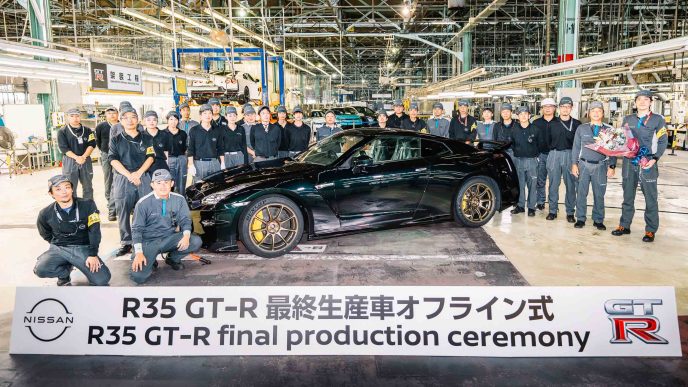
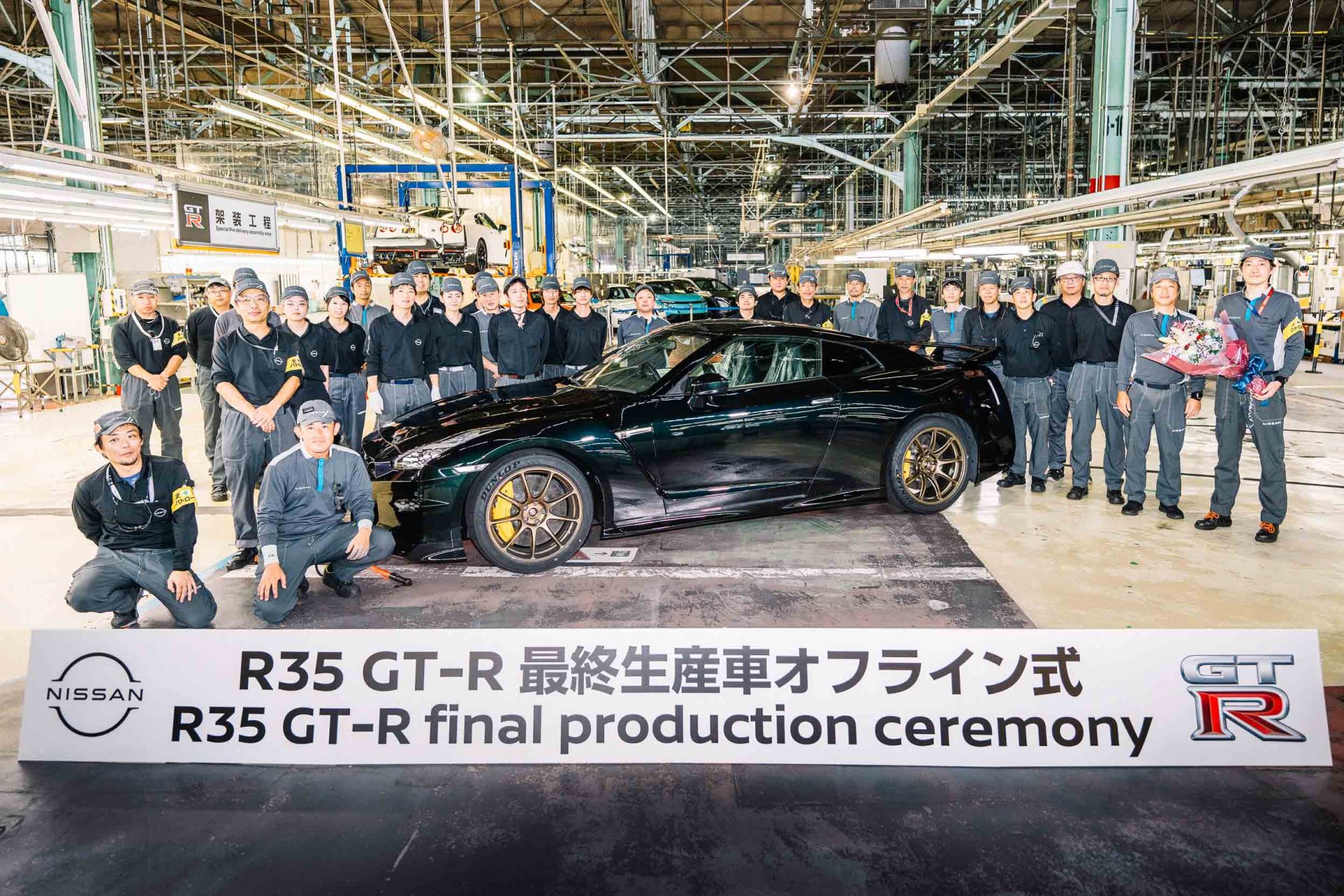
Last August 26, 2025, the final Nissan GT-R (R35) rolled off the line at Nissan’s Tochigi plant. A small farewell ceremony was held for that Midnight Purple T-Spec model, destined for a lucky customer in Japan.
This marks the end of an era for the R35 GT-R’s history, after 18 long years, multiple success stories in motorsports, records set, and around 48,000 units produced for the world.
It’s not every day that a single car model stays in production that long. Calling it Jurassic is an understatement, as the car has been in production through a global recession, multiple international conflicts, a global pandemic, and even the death of one of the world’s most iconic monarchs.

I was still in grade school when I came across the first release of the GT-R (the CBA-R35) on display at a fair. I was lucky enough to be able to sit in that one (as the owner had let me in), and with a deadly combination of exposure to the car from media, video games, and various forums online, the GT-R has earned a lifelong fan, even if there are better and far more emotionally moving cars out there.

In fact, by the time I entered the industry, the R35 was in production with several updates under its belt. These range from heavy visual updates to power- and handling modifications, but at its core, the R35 had always remained “stuck in time”, for better or worse.
For one, the car’s large and blocky silhouette was originally seen as unbefitting of something that could beat a Porsche 911 Turbo around the Nurburgring Nordschleife, but it is now considered iconic. Even after two major facelifts, the design hasn’t changed much. Why fix something that isn’t broken?


The large front grille, and its shape, the triangular headlights, the striking body line that extends from the fender vent, and, of course, those iconic four round taillights. Anyone not familiar with cars will know they’re looking at a GT-R even from afar, proof that this design has become universally recognizable.


Peer inside and you’ll notice that the general layout hasn’t changed since 2007, with the 2016 update modernizing the interior with a redesigned layout and switchgear. It’s noticeably old-feeling, but in a very good way. While it is a good thing that the interior is relatively plush, the focus of the GT-R is obviously on its driving experience.

That unelectrified, 3.8-liter twin-turbo V6 (VR38DETT) under the hood is very special. That and the incredibly quick-shifting six-speed dual-clutch automatic transmission are assembled in a clean room by special Takumi Craftsmen, each of whom signs their work off with a special plaque found on the front of the engine.

While power has risen from around 480 to 570 horsepower over the course of its production (not counting the higher power Nismo models), there’s one thing for certain: this car can and always has been able to hang with the big boys.

The explosive power demands respect. It can propel itself to unsafe speeds as fast as modern electrified vehicles do, and the clever ATTESA E-TS all-wheel drive system, massive Brembo brakes, the engineering put into the underpinnings, the active suspension, and clever aerodynamics allow the car to handle all of that power in an almost physics-defying package.

Of course, it’s delivered in a delightfully analog and raw experience that lets you feel everything that it does. Hydraulic steering that makes you feel everything on the road with satisfying weight. The sounds and thumps of mechanical linkages and plates clattering all around you. The loud, trumpet-like roar from the exhaust as you press down on the accelerator pedal.
You aren’t just driving a car that’s detached from the world or goes fast without any effort. No, the Nissan GT-R envelops you in everything that it does, making you feel like an essential part of the machine.

Who cares if the sound system is average? Does it matter if it has no modern tech in it, or if it lacks modern smartphone integration? Turn everything off and just soak the experience in, whether you are the driver or the passenger(s) in this car.
While Nissan has said that it is their goal for the GT-R nameplate to return in the near future, it will never be the same again, especially with the automaker hinting at an electrified future for the badge.

This is how the car has won the hearts of many around the world, and the automaker has set a very, very high bar for itself to match with this R35 generation. So, sayonara, R35. A true legend until its end.